
Agenda Facility Background Cleaning Performance Evaluation Cost-Benefit Analysis Recommendations and Next Steps Northern WTP History Multi-phase MGD Capacity MGD Capacity MGD Capacity renewable water RO Trains 1 + RO Trains 3 + RO Train 5 project UV Bypass Redundant 4th 5, AFY Stage brackish Replaced Phase 1 groundwater wells elements Facility Design Criteria Well Capacity: 15, GPM RO Bypass: 10-30% Finished Water Flow: 13, GPM Overall Recovery: 94.75% Parameter Value Unit RO System 1st and 2nd Stage Number of RO Trains 4 (LPRO) Total Permeate 9, GPM Design Criteria Total Concentrate 1, GPM Recovery 85% Array 48:24 (7 elements/vessel) Stage Membrane Toray TMH20A-400C Ultra-low pressure brackish water 99.3% Rejection 3rd and 4th Stage Number of RO Trains 4 (HPRO) Total Permeate 1, GPM Total Concentrate GPM Recovery 60-65% Array 12:6 (6 elements/vessel) Membranes Toray TMG20D- Low pressure brackish water 99.7% Rejection Source Water Quality Silica and hardness limit recovery Silica controlled by anti-scalant ahead of LPRO Calcium carbonate controlled by hydrochloric acid between 2nd and 3rd stages ECCV’s Common Cleaning Triggers LPRO Skids – Feed pressure above 160 psi OR Differential pressure above 20 psi OR Caustic + Acid Pump speed above 93% HPRO Skids – Stage 3 pressure above 200 psi OR Stage 4 normalized permeate Acid + Silica production below 40 gpm Toray’s TMM- Guidelines for RO Cleaning Normalized differential pressure increases more than 20% OR Normalized permeate flow rate decreases by more than 10% OR Normalized salt passage increases by more than 20% Cleaning Performance Evaluation Focused on: Feed pressure as primary indicator for cleans HPRO Skids Proprietary silica cleans Last two operating years Limitations: Cleaning logs have limited information Cost Benefit Analysis $480/element $7k/proprietary clean 108 – 144 elements per HPRO Skid Proprietary clean needs to extend life at least 3 months to be worthwhile at 3 $52-69k per HPRO for complete years of operation element replacement Proprietary clean needs to extend life at Typical RO element life 3 to 7 years least 9 months to be worthwhile at ECCV HPRO element life 3 to 5 years years of operation NPV for each month of operation Does not account for additional energy $800-2000 for 3 to 7 year lifespan costs or salt passage impacts Recommendations and Next Steps Always perform acid clean prior to silica clean Monitor length of time following acid + silica cleans until cleaning trigger is hit If acid + silica clean does not decrease feed pressures for at least 3 to 9 months consider replacement of elements Complete PFAS rejection piloting for aged and deteriorated elements Must monitor salt passage of elements to determine if replacement required regardless of cleaning recovery.
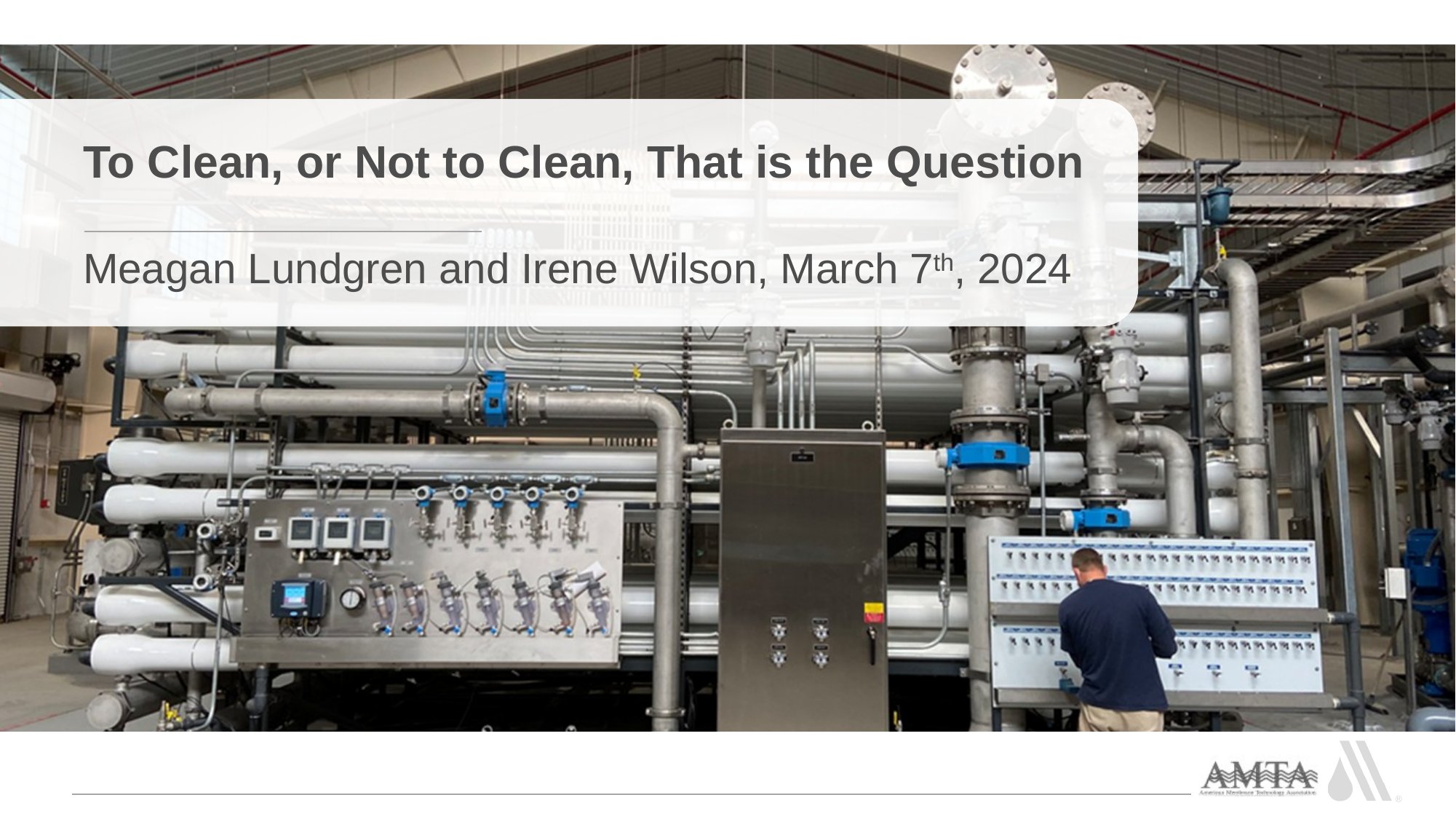
To Clean, or Not to Clean, That is the Question
| Details | |
|---|---|
| First Name | Meagan |
| Last Name | Lundgren |
| Keywords | Rynders, Brown, Carter, Niebur, Brackish Water, Groundwater, Hardness, Silica, Wtp, Clean, September, History |
| Year | |
| File | THU01-03_Lundgren_Meagan.pdf |
