
Introduction Ran into similar issue at operating desalter Wrote a memo to DDW with figures showing train operating pressures during cleaning DDW accepted no DBB on feed/concentrate connections Permeate air gapped at CIP tank Introduction Made similar arguments at new facility Not accepted – had to add DBB Disparate treatment troubling; particularly with advent of automated cleaning systems Backflow Prevention State Water Resources Control Boad, Nov. 2, 2022 Draft CrossConnection Control Policy Handbook “ A cross-connection is an interconnection between a potable water supply and a non- potable source via any actual or potential connection or structural arrangement between a public water system and any source or distribution system containing liquid, gas, or other substances not from an approved water supply.” “ The presence of a cross-connection represents a location in a distribution system through which backflow of contaminants or pollutants can occur. Backflow occurs when a non-potable ” source is at a greater pressure than the potable water distribution system. Surface Water Treatment; Article 4 – Design Standards; Section 64658 – New Treatment Plants “ All new filtration and disinfection facilities shall be designed and constructed to comply b) with the following criteria: (1)Achieve an average daily effluent turbidity goal of 0. NTU when using conventional, direct, and diatomaceous earth filtration plants. (2)Be free of structural and sanitary hazards. (3)Protect against contamination by backflow. (4)Meet the capacity and pressure requirements prescribed in CCR sections ” 64554 and 64602… Backflow Prevention for RO Trains RO Membrane Train Feed Permeate Concentrate Cleaning System Backflow Risk Assessment for RO Trains Feed RO Membrane Train 120 psig 15 psig Permeate <5 psig 100 psig Concentrate <5 psig 40 – 60 psig Train Online – Cleaning Cleaning System System Lines Pressurized Backflow Risk From Cleaning Typical Cleaning Process: Solution Makeup Train Filling/Displacement Solution Circulation/Soaking Train Flushing/Solution to Waste Typical Train Startup: Low Pressure Feed Flush Backflow Risk From Cleaning Overall Risk to Public Heath is Low: Cleaning solution contact primarily on the feed/concentrate side of the membrane Membrane barrier intact during cleaning CIP valve misalignments are rare and discoverable Post CIP flushing addresses residuals entering permeate Next Steps Recommend a re-assessment of backflow risk Regulators should publish clear requirements; not leave it up to individual officers Address reuse facilities along with potable treatment plants Differentiate between requirements for MF/UF and RO systems.
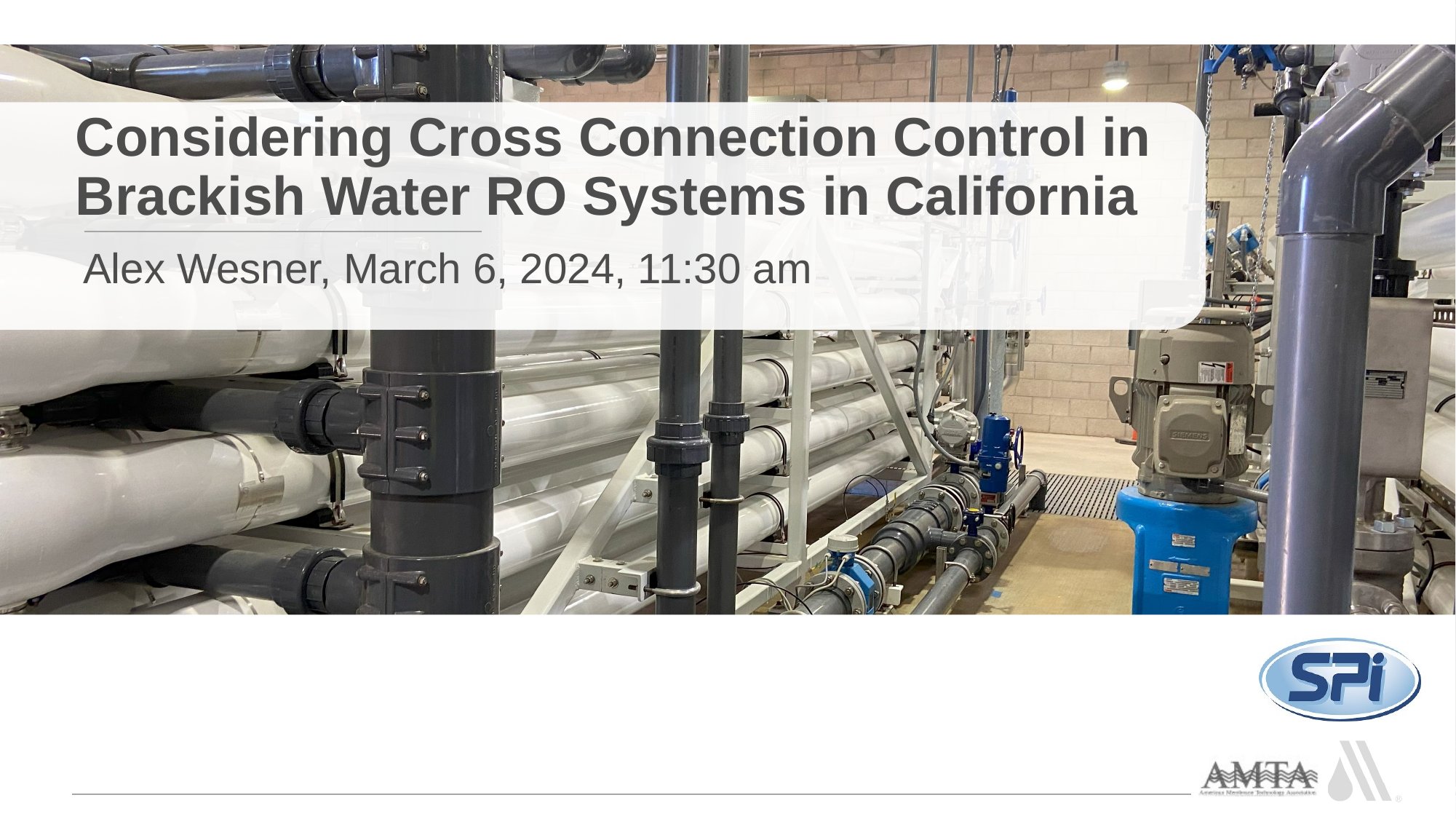
Considering Cross Connection Control in Brackish Water RO Systems in California
| Details | |
|---|---|
| First Name | Alex |
| Last Name | Wesner |
| Keywords | Brackish Water, Surface Water, Potable Water, Turbidity, Cip, Backflow, Backflow Risk, Backflow Prevention |
| Year | 2024 |
| File | WED05-03_Wesner_Alex.pdf |
