
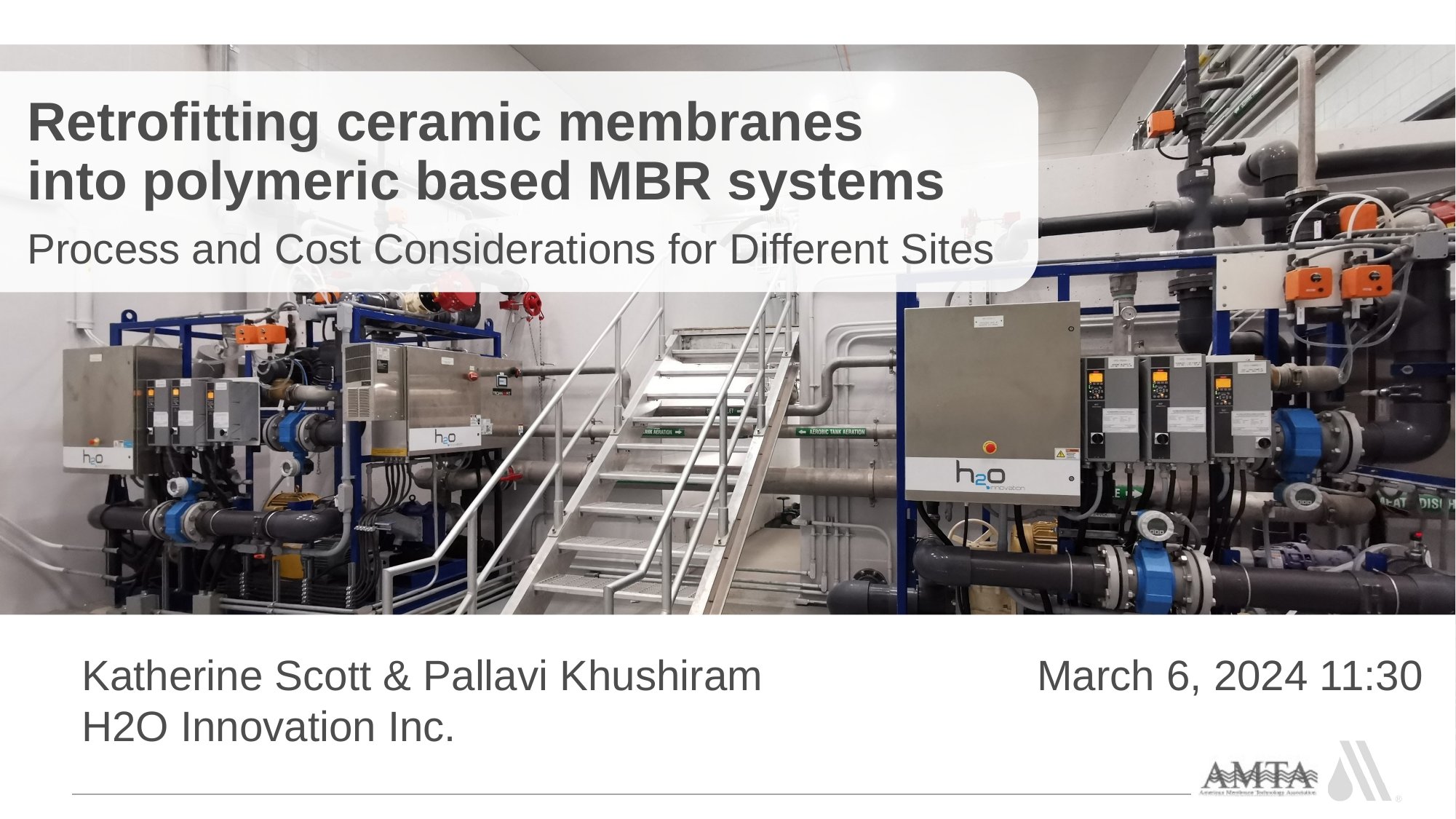
Retrofitting ceramic membranes into polymeric based MBR systems Process and Cost Considerations for Different Sites Katherine Scott & Pallavi Khushiram March 6, 2024 11: H2O Innovation Inc. Drivers for Retrofitting with Ceramic Operational challenges with Total Capital cost of retrofit current system (fiber breakage, (modifications + membranes) challenging influent) Required footprint / packing Anticipated membrane longevity density in ceramic systems Operating costs – energy Uncertainty in replacement requirements price and availability in Design complexity / barriers to polymeric systems entry with new technology Case 1 – 75,000 gpd decentralized reuse plant Primary driver: Operational challenges with influent water quality Unanticipated high FOG in the influent led to low membrane permeability and operational challenges Cost of manpower exceeded budget Change in influent water quality led to the conclusion that polymeric membranes alone were not a good long-term choice; alternative treatment methods were investigated to prevent system failure. Case 2 – 709,000 gpd decentralized reuse plant Primary driver: Operational challenges with influent water quality Clogging events and challenges in influent Interested in exploring alternatives to decrease operator maintenance activities and improve expected membrane life Case 3 – 13,000 gpd municipal packaged plant Primary driver: Investigating options during membrane replacement Polymeric membranes approaching end of life Existing membranes no longer available on the market Fiber damage and low membrane permeability due to equipment neglect and harsh climate conditions Operations team are hesitant to continue with polymeric membranes. Ceramic membranes are proposed as a more robust alternative that can sustain harsh operating conditions within the same limited footprint. No change in power consumption Robustness: Ceramic membranes more resistant to harsh conditions. Case 4 – 50,000 gpd municipal packaged plant Primary driver: Evaluating membrane options during bidding phase Upcoming Municipal MBR plant treating domestic wastewater Flexible design: Plant open to implement both membrane options Opportunity to evaluate the cost and lifecycle of both options at the bid phase Summary CAPEX Install/OPEX Driver Flow [GPD] Costs Costs Increased Less than half manpower and Case 1 75,000 3.0x on 20-yr reduced PVDF lifecycle life Increased manpower but Four times on Case 2 709,000 3.8x no impact to 20-yr lifecycle PVDF life Higher CAPEX End of life Case 3 13,000 2.2x offset by longer replacement membrane life Comparable Case Greenfield 50,000 1.5x install costs Upfront cost to switch is minimized in… Small plants (<100,000 gpd / 1 membrane module per train) Plants with low barriers for footprint Low flux systems Flat sheet membranes / systems with low packing density Spare space Power and chemical impact is not significant on total plant OpEx Plants with flexible platform / universal design built in upfront.
Retrofitting Ceramic Membranes into Polymeric-Based MBRs – Process and Cost Considerations for Different Sites
| Details | |
|---|---|
| First Name | Katherine |
| Last Name | Scott |
| Keywords | Polymeric Membrane, Capital Cost, Permeability, Air Scour, Pvdf, Tmp, Mbr, Reuse Plant |
| Year | 2024 |
| File | WED06-03_Scott_Katherine.pdf |
